
The Strategic Imperative for Infrastructure Flexibility
For IT leaders navigating virtualization in 2026, infrastructure choice is no longer optional. The post-acquisition licensing shifts from vendors like VMware Broadcom have introduced uncertainty and cost volatility for organizations tied to proprietary hypervisors.
According to CIO Dive, 99 percent of surveyed IT leaders expressed concern over vendor consolidation and pricing control. Seventy-five percent classified it as “extreme”. Vendor lock-in has become a financial liability.
Legacy virtual desktop infrastructure (VDI) solutions often restrict organizations to a single or few hypervisor ecosystems. These dependencies limit the ability to pivot when pricing, licensing, or support policies change. They also make switching prohibitively complex.
A new generation of virtual desktop solutions, based on hypervisor-agnostic principles, empowers IT teams to retain control, reduce cost, and future-proof infrastructure.
This article outlines how selecting a hypervisor-independent VDI platform like Inuvika OVD Enterprise offers measurable savings and strategic freedom.
Section 1: The Agnostic Advantage. Freedom from Infrastructure Lock-In
Legacy VDI solutions such as VMware/Omissa Horizon are tightly integrated with their own hypervisor ecosystems. As a result, switching to an alternative hypervisor like Nutanix AHV, (the only proposed option) would either be impossible or require substantial reconfiguration, retraining, and migration. While Omnissa has announced that it will start supporting AHV, it will be a while before that is properly tested and able to work through the bugs that other platforms have already done for many years. And it is not a lot less expensive than VMware Broadcom’s product.
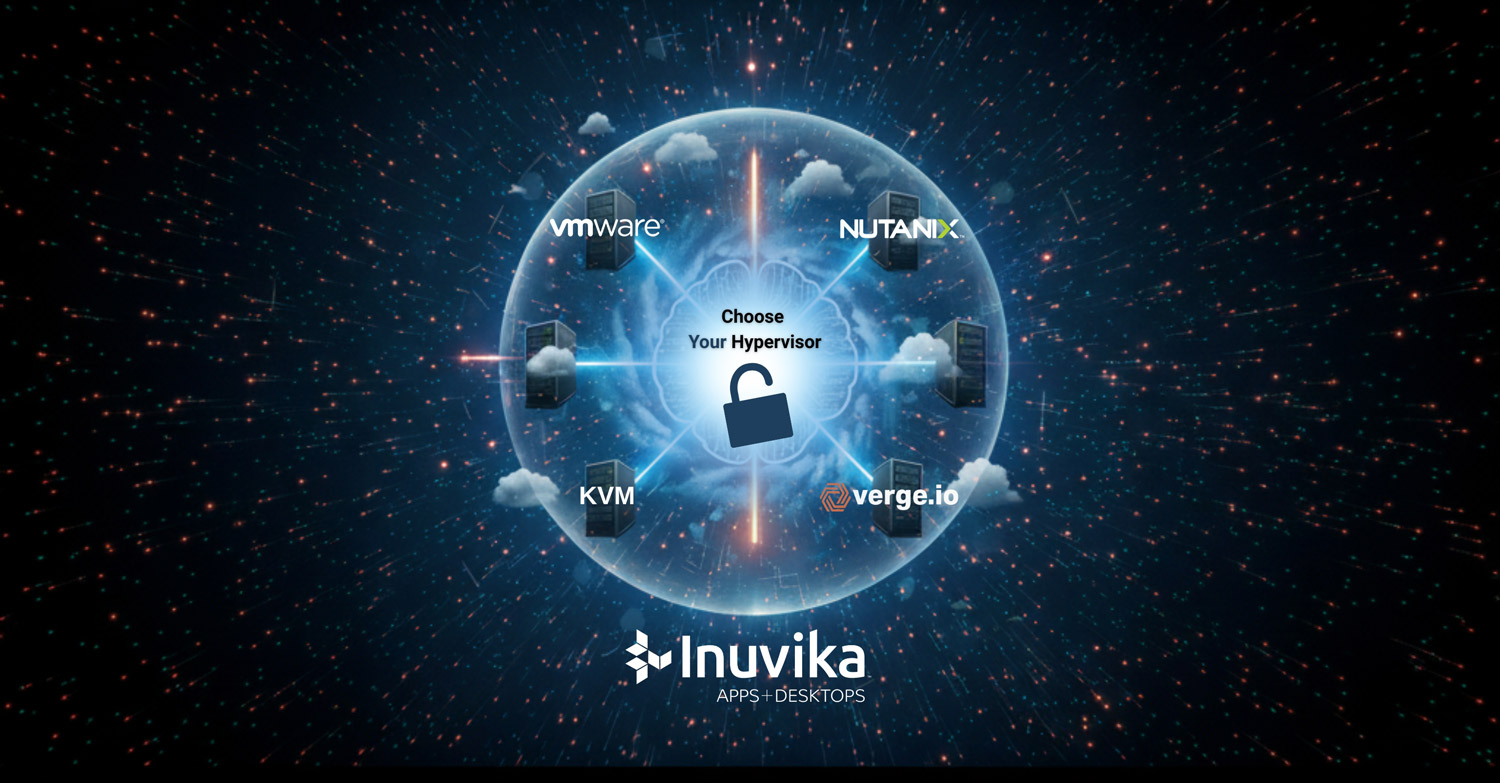
In contrast, hypervisor-agnostic platforms like Inuvika OVD Enterprise are designed to work seamlessly across multiple infrastructures. Whether deployed on vSphere, KVM, AHV, ProxmoxVE, Verge.IO, or others, they preserve the organization’s ability to optimize cost and avoid vendor entrenchment.
The advantages extend well beyond compatibility. Inuvika integrates hypervisor freedom with a modern Linux-based architecture that drives total cost of ownership (TCO) benefits across the board:
- Concurrent user licensing significantly reduces license waste in shift-based or educational environments.
- The Linux-based core eliminates Microsoft SQL Server requirements.
- Built-in remote access and session brokering reduce the need for third-party add-ons.
| Cost Component | Legacy VDI (Omnissa / VMware) | Modern VDI (Inuvika OVD Enterprise) | TCO Impact |
| Hypervisor Requirement | Locked to single vendor (e.g., vSphere) | Compatible with any hypervisor | Protects against price hikes |
| Licensing Model | Named-user or device-based | Concurrent user licensing | Reduces per-user cost |
| Backend Platform | Windows-based infrastructure | Linux core eliminates most MS licensing | Lowers recurring licensing costs |
| Gateway & Add-ons | May requires separate purchase | Included with subscription | Reduces OPEX and setup complexity |
START YOUR FREE TCO ASSESSMENT TODAY
Section 2: Simplified Operations. Reducing Administrative Overhead
Beyond licensing and infrastructure, vendor lock-in adds hidden complexity to daily operations. Legacy VDI solutions often require:
- Separate management consoles for hypervisors, sessions, gateways, and users.
- Specialized skills for maintaining hypervisor-specific tools.
- Dependency on third-party support for integrations.
Inuvika streamlines this with a unified web-based management console. IT teams manage users, desktops, and session policies centrally, without navigating multiple interfaces or vendors.
Because OVD Enterprise installs in hours rather than days or weeks, organizations avoid costly deployment engagements or migrations and achieve faster time to value. A simplified stack also reduces support calls and helps IT teams shift focus from maintenance to innovation.
Section 3: Future-Proofing Your Investment
As hypervisor pricing evolves, being locked into a single ecosystem exposes IT budgets to risk. Choosing a vendor-neutral platform ensures that infrastructure decisions remain aligned with your organization’s goals, not vendor roadmaps.
Inuvika’s hypervisor-agnostic design means IT teams can choose the best-performing and most cost-effective platform available today. They can also pivot in the future without disruption.
In addition to cross-platform flexibility, Inuvika also allows continued use of lower-cost endpoints such as repurposed PCs, Chromebooks, or thin clients. Inuvika’s dedicated thin client OS, ResoluteOS, ensures these devices remain secure and usable for years beyond the normal replacement cycle, maximizing hardware ROI.
Conclusion: The Power to Choose
Virtual desktop solutions should offer freedom, not limitations. When the underlying architecture is built on vendor neutrality, organizations gain more than compatibility. They gain leverage.
By adopting a hypervisor-agnostic solution like Inuvika OVD Enterprise, IT teams unlock long-term cost savings, simplify operations, and insulate their environments from disruptive pricing changes.
The decision is strategic: choose flexibility over dependency.